

Becoming a registered provider under the National Disability Insurance Scheme (NDIS) opens the door to a much larger pool of participants and funding opportunities — but it also comes with a formal compliance process that many providers underestimate. At the center of that process is NDIS certification, the audit-based pathway required for providers delivering higher-risk or complex supports. If you’re planning to register, understanding how certification works — and how it differs from the simpler verification pathway — will save you time, money, and unnecessary stress.
What Is NDIS Certification?
NDIS certification is one of two assessment pathways the NDIS Quality and Safeguards Commission uses to register providers, the other being verification. Certification applies to providers offering higher-risk supports — think supported independent living, specialist behaviour support, or services involving complex care needs. Because these services carry greater potential impact on participants’ health, safety, and wellbeing, the Commission requires a more rigorous, on-site audit process before approving registration.
Unlike verification, which mostly checks documentation and basic qualifications, certification involves a full assessment of your organisation’s systems, policies, and practices against the NDIS Practice Standards. An approved third-party auditor conducts this assessment, not the Commission itself.
Certification vs. Verification: Why It Matters
Providers are often unsure which pathway applies to them. Generally:
- Verification suits lower-risk services like household tasks, transport, or plan management — mostly a paperwork check.
- Certification applies to higher-risk, complex supports and requires a comprehensive audit of your operational systems.
Choosing (or being assigned) the wrong pathway assumption early on can derail your application timeline, so it’s worth clarifying which registration groups your services fall under before you start preparing documentation.
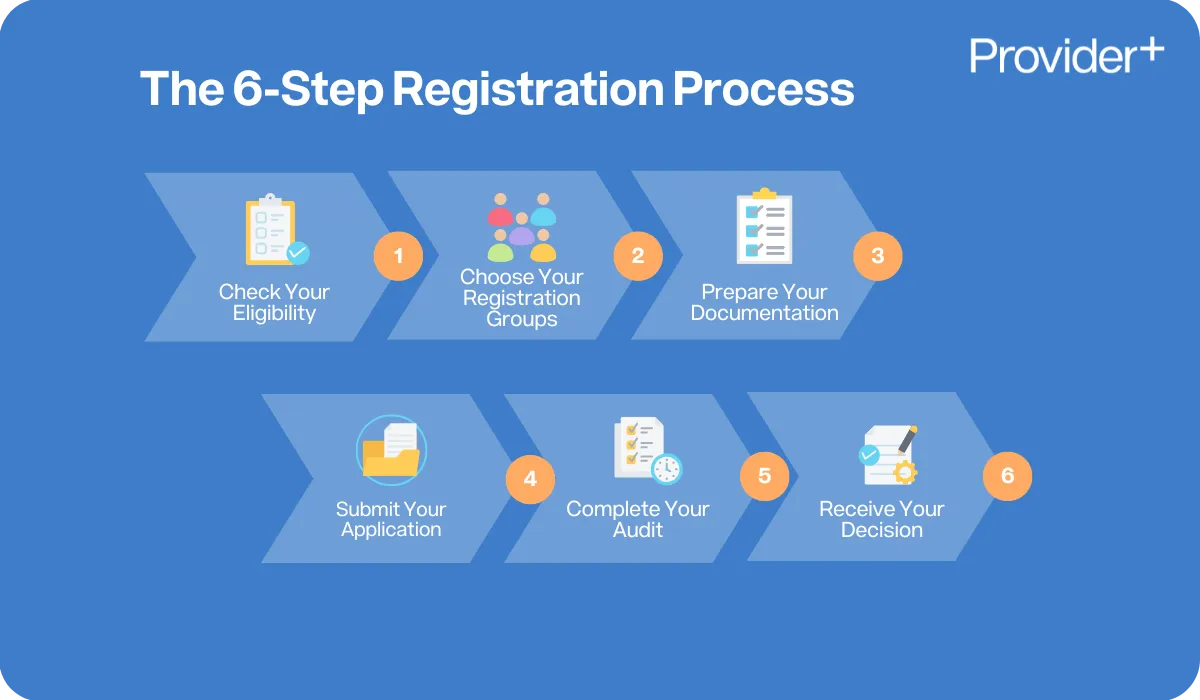
The Certification Process: Step by Step
1. Determine Your Registration Groups
Identify exactly which NDIS support categories you intend to deliver. This determines the scope of your audit and which Practice Standards modules apply.
2. Engage an Approved Quality Auditor
You must select an auditor from the Commission’s list of approved quality auditors. They’ll guide you through the specific requirements for your registration groups.
3. Prepare Your Policies and Systems
This is the most demanding part. You’ll need documented policies covering areas like incident management, complaints handling, risk management, human resources, participant rights, and governance — all aligned with the NDIS Practice Standards.
4. Stage One Audit (Desktop Review)
The auditor reviews your documentation to confirm your systems meet the required standards on paper.
5. Stage Two Audit (Site Audit)
The auditor visits your premises, interviews staff and (where applicable) participants, and observes how your documented policies translate into actual practice.
6. Certification Outcome
If successful, the auditor issues a certificate, which you submit with your registration application to the Commission for final approval.
Common Pitfalls Providers Should Avoid
- Underestimating documentation requirements — Policies that look good on paper but aren’t embedded in daily practice often fail site audits.
- Choosing the wrong registration groups — This can mean redoing parts of the audit later.
- Delaying staff training — Auditors frequently interview frontline staff, and gaps in understanding of policies are a common audit finding.
- Treating certification as a one-off event — Certification isn’t permanent. Providers must undergo surveillance audits and recertification on a rolling basis to maintain registration.
How Long Does It Take?
Timelines vary depending on organisational readiness, but providers should generally budget several months from initial preparation to final certification — longer if policy development or system changes are needed before the audit. Starting early and working closely with your chosen auditor from the outset tends to shorten this significantly.
Final Thoughts
NDIS certification is a rigorous but manageable process when approached methodically. The key is treating it as an operational readiness exercise, not just a compliance formality — auditors are assessing whether your organisation can consistently deliver safe, quality supports, not just whether you have the right paperwork. Providers who invest early in strong systems, staff training, and clear documentation tend to move through certification with far fewer surprises.
If you’re preparing to apply, start by mapping your intended registration groups against the NDIS Practice Standards, and engage an approved auditor early to get a clear picture of what your specific certification pathway will involve.
