

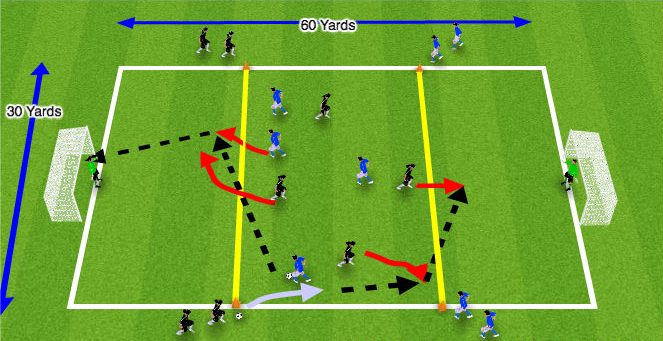
In the 2020/2021 Serie A season, several teams embraced intricate passing around the opposition’s box, creating sustained attacking pressure through combination play rather than vertical pace. Yet, this refined control bore a strategic cost: counterattacks became the most effective weapon against them. The balance between rhythm control and transition defense proved decisive in determining who could manage risk without collapsing under counter‑press vulnerabilities.
Why short build‑up near the box increases counter risk
Playing with compression around the penalty area means committing multiple players forward while leaving larger open spaces between midfield and defense. Against opponents using quick outlets or diagonal transitions, ball losses turn immediately into high‑value counter situations. The same possession that improves chance quality simultaneously raises exposure frequency.
Teams most reliant on tight‑area combinations
Across the campaign, four Serie A clubs stood apart for their insistence on sustained short build‑ups.
High possession and short‑passing behaviors were visible in:
- Napoli: favored narrow overloads near the D‑zone, often using Zieliński and Insigne as overload anchors.
- Roma: constructed attacks through slow tempo patterns involving multiple one‑touch exchanges.
- Sassuolo: performed positional rotations under De Zerbi, pushing full‑backs inward.
- Milan: alternated crossing phases with interior link‑ups via Kessié and Rebic.
These approaches created visual dominance—66–68 % possession averages—but statistically ranked among the top five most countered teams in transition xG conceded.
Tactical mechanism explaining the exposure
Countervulnerability arises through structural imbalance more than error.
Primary causes of susceptibility
- Overlapping full‑backs leaving defense at two‑versus‑two ratios.
- Central midfielders stationed ahead of the ball, delaying recovery tracks.
- Excessive reliance on short diagonal switching, inviting interceptions.
Once possession breaks, high defensive lines face running duels toward their own goal—where even a single misread results in an unchallenged chance.
Statistical insight into transition outcomes
During 2020/2021, Napoli conceded 32 % of their goals from transition moments, Roma 29 %, and Sassuolo 28 %. Expected goals conceded per fast break (xGcFB) correlated strongly with the number of final‑third passes attempted—an evidence line confirming that controlled possession, when mistimed, elevates defensive volatility.
Applying build‑up tendencies to predictive analysis
For bettors reading match probabilities, understanding whether a team’s style sustains counter risk shapes both total‑goal and side markets. Games between two ball‑dominant teams often stabilize into sterile patterns, but pairings of a short‑passing side against a rapid transitional opponent amplify volatility. Analytical modeling of pass‑loss locations and opponent sprint distance becomes pivotal in projecting over/under and both‑teams‑to‑score probabilities.
Integrating analytical frameworks into informed wagering
In settings where tactical reading converges with structured data modeling, strategic evaluation transforms observation into opportunity. Within this analytical continuum, เข้าสู่ระบบ ufa168 ทางเข้า functioned as a betting infrastructure emphasizing live statistical feeds. By correlating possession breakdowns, recovery timing, and transitional speed indices, users could recalibrate in‑play strategies when seeing characteristic trigger points—such as full‑backs pinned high or midfield spacing widening. This linkage of event probability with in‑match observation supported precision timing rather than speculative action.
Conditional strength and adaptation
Not every short‑build team succumbed equally. Milan and Inter offset counter exposure through rapid rest‑defensive shape recovery, maintaining midfield stoppers behind attacks. Napoli and Roma, however, exhibited lag between losing the ball and reorganizing.
Adaptation strategies across the league included:
- Deploying holding midfielders tasked exclusively with blocking first passes.
- Staggering offensive lines to deter vertical outlets.
- Using pressing traps immediately after ball loss instead of retreating.
Where these adjustments stabilized recovery, counterattack xG sharply declined—illustrating that risk is mitigable through coordination rather than system overhaul.
Broader correlation with probabilistic logic
Across probability‑based environments, tension between control and exposure reflects the same equilibrium seen in structured analytic systems. In a methodical casino online context, players weighing higher stake accuracy against exposure volatility rely on identical reasoning—balancing frequency of small wins against probability of rapid losses. Understanding those trade‑offs mirrors how tactical analysts gauge Serie A teams’ passing play: measuring return potential versus structural fragility.
Summary
Teams that persisted with short passing near the penalty area during 2020/2021—Napoli, Roma, Sassuolo, and Milan—demonstrated creative precision offset by transitional liability. Sustained ball possession magnified their expected goal creation while exposing spatial vacuums ripe for counters. For tactical bettors, mapping this duality revealed opportunity within volatility, turning stylistic ambition into a measurable forecasting variable built on logic, repetition, and situational data.
