

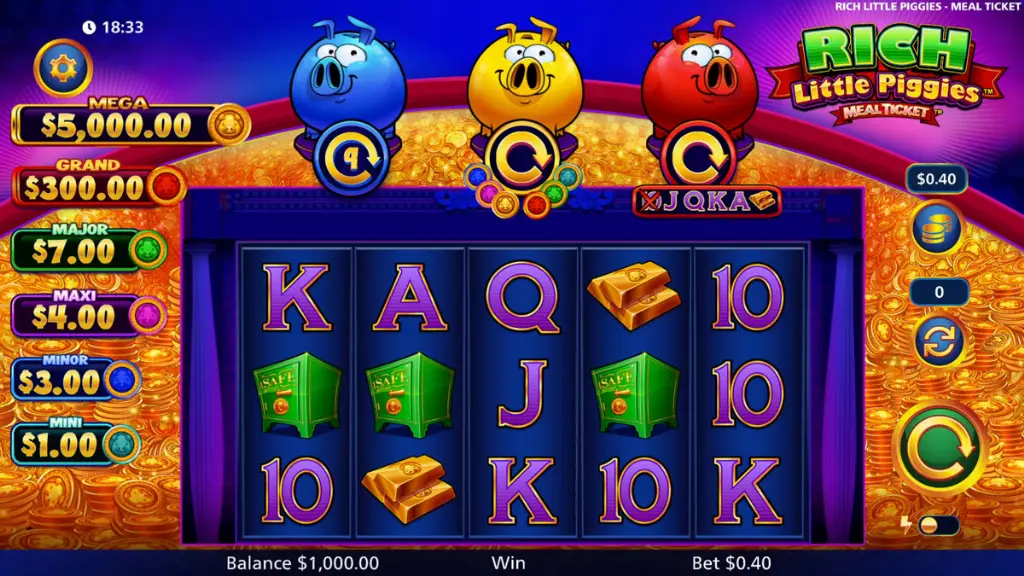
The phrase “สล็อตโกง” (rigged slots) keeps resurfacing because players experience heavy variance, unclear math, and sometimes genuinely untrustworthy operators. Even when regulated slots run on certified RNGs, the way losses feel, the way information is presented, and the way myths spread makes “rigged” a convenient story.
Why Do Players Reach for the Word “Rigged” After Losing?
When outcomes are painful, people naturally search for causes beyond bad luck. Psychology and decision‑science work show that humans are uncomfortable attributing long, costly downswings purely to randomness and therefore look for intentional agents—someone “doing it to them.” In slots, this often becomes the claim that the machine is fixed, especially when a player has just lost a series of sessions in a row or saw someone else win on a game they recently left.
The negative expectation embedded in house edge intensifies this perception. Guides on casino fairness emphasise that slots can carry edges in the 2–10% range, which guarantees long‑term operator profit while allowing short‑term wins. From a design standpoint that is transparent math; from a player’s standpoint it often feels indistinguishable from “the game is set up to make me lose,” which easily collapses into the simpler label “rigged.”
How Do RNG and House Edge Get Confused in “Rigged Slot” Debates?
Articles addressing “are slots rigged?” consistently draw a line between two ideas: a legitimate house edge and illegitimate manipulation. Regulated slots use Random Number Generators (RNGs) that produce independent outcomes, and math models (RTP, paytables) that give the casino a known percentage over time. Technically, the game is “rigged” only in the sense that the expectation is negative for the player, not in the sense that results are selectively altered or targeted.
Public communication often blurs that distinction. Studies find that many players misinterpret RTP messages—reading “95% RTP” as “95% chance to win”—which inflates perceived fairness and then makes real‑world losing streaks look like evidence that the machine is cheating. When people discover the real meaning of RTP and house edge later, the emotional whiplash (“I thought I had a fair chance”) reinforces the narrative that the system must be more than just math.
How Do Design Choices and “Losses Disguised as Wins” Fuel Distrust?
Slot UX is intentionally stimulating: multiline wins, celebratory sounds, and visual effects can occur even when the monetary outcome is a net loss. Laboratory research on “losses disguised as wins” (LDWs) shows that players often categorise events where they win less than they bet as wins, responding physiologically and emotionally as if they had gained money. This mislabelling makes payback seem higher than it is, biasing perceived odds upward.
When the financial reality—slow but steady loss consistent with house edge—eventually becomes obvious, players may feel misled by the machine’s feedback and conclude that the game is unfair beyond its published math. Combined with near‑miss patterns and complicated paylines, these design choices create a gap between experienced chances of winning and actual chances, which is often filled by the accusation that “the slot is cheating me.”
What Role Do Real Unfair Operators and Red Flags Play?
The phrase “rigged slots” is not always wrong: outside regulated environments, there are documented cases and risk factors for manipulated games. Fair‑play guides warn about red flags for unfair RNG: absence of third‑party certification, no visible eCOGRA/GLI/iTech Labs seals, hidden or vague information on testing, and no accessible game logs. Without transparent audit trails, nothing stops an operator from deploying non‑certified software or altering payout logic server‑side.
Consumer‑education pieces on online casinos explicitly differentiate licensed sites, where RNGs are tested and locked under regulatory oversight, from unlicensed venues that may run unchecked. Stories of genuine scams—even if rare compared with the total market—give players vivid examples that make “สล็อตโกง” feel like a reasonable default suspicion. Each real case becomes a reference point that colours how people talk about the whole category.
Where “Rigged” Fits on the Spectrum from Math to Fraud
A useful way to frame the phrase “rigged slots” is as a spectrum, which different sources implicitly describe:
- Mathematically unfavourable but fair: Certified RNG, published RTP, negative player expectation but no hidden manipulation.
- Opaque yet compliant: RNG may be certified, but messaging and UX (LDWs, vague RTP text) cause players to overestimate their chances.
- Genuinely unfair: No verifiable RNG audits, hidden data, or evidence of manipulated outcomes—matching the everyday sense of “rigged.”
The phrase “สล็อตโกง” tends to be applied across all three, even though only the last category matches its strongest meaning.
How Do Forums, Social Media, and Peer Stories Amplify “Rigged Slot” Narratives?
Online spaces amplify emotionally charged anecdotes. Casino and slot communities regularly feature posts insisting that RNG cannot be trusted or that “the game changed after my big win,” often backed by screenshotted streaks. These narratives receive engagement because they channel shared frustration and offer a simple explanation that feels more satisfying than variance and house edge.
Myth‑debunking articles repeatedly note that even when technical explanations are available—about RNG independence, certification, and fixed RTP—many players prefer experiential evidence: what they felt during a session or what a friend reported. Once “slots are rigged” becomes part of group vocabulary, it is used loosely to describe everything from expected house advantage to suspected criminal manipulation, keeping the phrase permanently in circulation.
How Does casino online Presentation Shape Perceptions of Cheating?
The move to digital interfaces changes how fairness signals are presented. Guides on rigged casinos emphasise that reputable sites highlight licensing, RNG certificates, and detailed fairness pages, while questionable ones hide or omit these cues. When a casino online front end offers only aggressive promotions, leaderboards, and “hot games” labels without clear technical context, players are pushed toward intuitive, story‑driven interpretations of losing streaks—“the algorithm is against me”—rather than toward structural explanations.
Conversely, transparency can dampen “rigged” narratives. When operators show RTP, explain that every spin is RNG‑driven and independent, and link to certifier records, trust tends to improve, even though house edge remains. The underlying math does not change; what changes is the available vocabulary: players are more likely to say “this game is expensive” than “this game is cheating me” when they can see the edge quantified.
How Does a UFABET-Style Multi-Product Context Affect the “Rigged” Conversation?
In ecosystems where slots sit alongside sports betting, poker, or other verticals, players already familiar with odds and margins bring different expectations into slot games. They accept that sportsbooks hold a known overround but expect transparency about markets and prices; when slots feel opaque by comparison, frustration more readily turns into accusations of cheating. If these users notice that a service such as ufa747 pro includes licensing details, RNG testing references, and RTP ranges within its slot catalog, that observed structure helps align slots with the rest of the gambling menu: everything has a cost, but the cost is rule‑based and auditable rather than arbitrary.
Practically, that context encourages a more analytical framing: slots become a high‑variance, high‑edge component in a broader risk portfolio, not an unpredictable black box. The phrase “สล็อตโกง” still appears in conversation, but more as shorthand for “structurally disadvantageous” or “poorly communicated,” and less as a literal allegation of on‑the‑fly algorithmic cheating under a single multi‑product account.
Summary
“สล็อตโกง” persists in casino discourse because several forces converge: harsh variance and negative expectation create experiences that feel like cheating; UX features and ambiguous RTP messaging distort perceived chances; real cases of unregulated manipulation and red‑flag operators exist; and online communities reward simple, blame‑based explanations over abstract math. In well‑regulated settings, certified RNGs and fixed RTP models mean slots are mathematically unfavourable yet procedurally fair, but as long as that distinction between house edge and actual rigging remains opaque, the language of “rigged slots” will remain a convenient way for players to make sense of loss‑heavy outcomes.
