

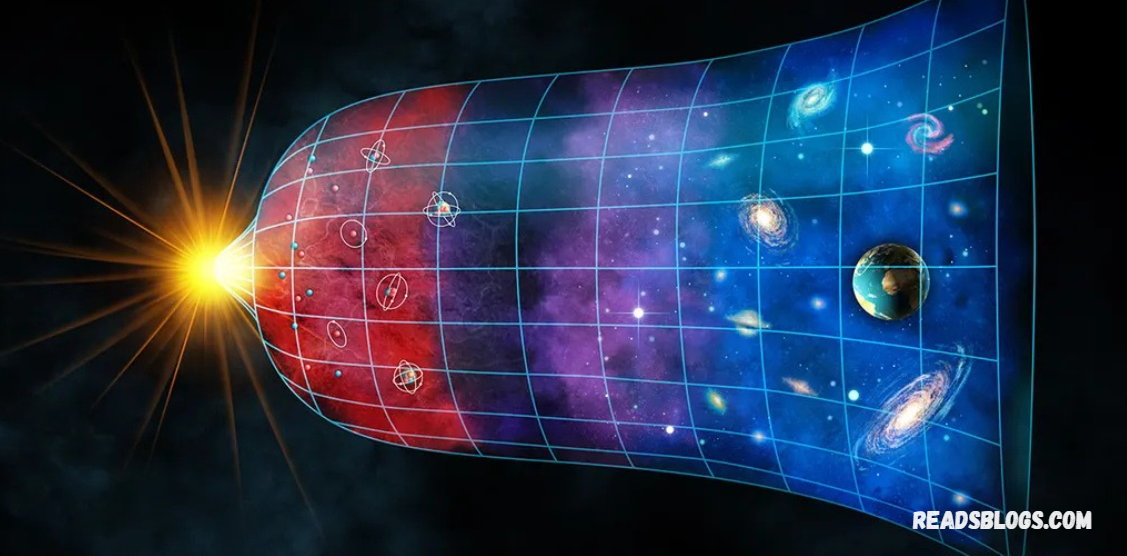
The rate at which the universe expands is referred to as the Hubble constant, named after the astronomer Edwin Hubble. Along with Milton Humason, Hubble demonstrated that the velocity at which a galaxy moves away from Earth is directly proportional to its distance. This relationship can be expressed mathematically as:
velocity = Hubble constant × distance.
Rearranging the equation, the Hubble constant is calculated as:
Hubble constant = velocity ÷ distance.
It is typically measured in units of kilometers per second (km/s) per megaparsec (Mpc), where one megaparsec equals approximately 3.26 million light-years.
The value of the Hubble constant has been a subject of extensive research. In 1929, Hubble’s initial estimation suggested a value of about 500 km/s/Mpc. By the 1960s, more refined measurements had reduced this estimate to around 100 km/s/Mpc, though astronomers remained divided, with some favoring 100 km/s/Mpc and others advocating for a lower value of 50 km/s/Mpc. Resolving this discrepancy became one of the main objectives of the Hubble Space Telescope (HST), and in 2001, HST measurements suggested a value of 72 km/s/Mpc.
However, this consensus was short-lived. Recent precise measurements of the cosmic microwave background have indicated a value of roughly 68 km/s/Mpc. Meanwhile, measurements from methods similar to those used by HST still support the earlier value of 72 km/s/Mpc. This ongoing discrepancy, known as the “Hubble tension,” remains an unresolved issue in the field of cosmology.
The Discovery of Cosmic Expansion
The idea that the universe is expanding was first proposed by Belgian astronomer Georges Lemaître in the 1920s, and it was later confirmed by American astronomer Edwin Hubble. In 1929, Hubble observed a correlation between the distance of galaxies and their speed of recession—galaxies farther away from Earth were moving faster. This relationship became known as Hubble’s law, and it was groundbreaking because it provided concrete evidence that the universe itself was expanding.
Hubble’s law is mathematically expressed as:
velocity = Hubble constant × distance
This equation means that the velocity at which a galaxy is moving away from us (its “recession velocity”) is proportional to its distance from Earth. Rearranging the equation, the Hubble constant (H) can be calculated as:
Hubble constant = velocity ÷ distance
The Hubble constant provides a measure of the rate of expansion of the universe, typically expressed in kilometers per second (km/s) per megaparsec (Mpc), where one megaparsec is roughly 3.26 million light-years.
Early Estimates and Controversy
When Hubble first estimated the Hubble constant in 1929, he found a value of about 500 km/s/Mpc. However, this value was later revised as more precise observations were made. By the 1960s, measurements were indicating a value closer to 100 km/s/Mpc, a significant reduction. Still, the astronomical community remained divided, with some supporting the 100 km/s/Mpc estimate, while others argued for a value closer to 50 km/s/Mpc.
This disagreement between estimates persisted for decades, primarily due to the challenges involved in measuring such a vast and distant universe. One major difficulty lies in determining accurate distances to far-off galaxies, which can vary depending on the method used. For example, astronomers could use Cepheid variable stars to measure distances in nearby galaxies, or the redshift of galaxies’ light to estimate velocity. Yet each method carries its own set of uncertainties.
The Role of the Hubble Space Telescope
The launch of the Hubble Space Telescope (HST) in 1990 provided astronomers with an unprecedented opportunity to refine their measurements of the Hubble constant. The HST allowed for more accurate observations of distant galaxies and their motions, leading to a consensus value of 72 km/s/Mpc by 2001. This result was widely accepted for several years and seemed to settle the debate.
However, in recent years, new data from a different source—measurements of the cosmic microwave background (CMB) radiation—has cast doubt on this value. The CMB, the faint afterglow of the Big Bang, provides a snapshot of the universe when it was only about 380,000 years old, allowing astronomers to calculate the expansion rate at that time. When combined with the standard model of cosmology, these measurements suggest a Hubble constant of around 68 km/s/Mpc.
Visit Now:
The Basics of Corporate Structure
How to Use AI in Business Planning
The Hubble Tension
This discrepancy between the two methods—one based on observations of distant galaxies using Cepheid variables and the other based on measurements of the cosmic microwave background—has led to what is now called the “Hubble tension.” The values are in stark contrast, with a difference of around 4 km/s/Mpc. This ongoing debate has divided the cosmological community.
Why does this matter? The value of the Hubble constant is not just a number—it affects our understanding of the age, size, and evolution of the universe. A higher value suggests a younger universe, while a lower value implies an older one. Resolving this tension could provide insight into unknown aspects of fundamental physics, such as potential new particles, modifications to the laws of physics, or alternative models of dark energy and dark matter.
What’s Next?
The question of how fast the universe is expanding is far from resolved. New observational techniques and more precise measurements are expected to help astronomers settle the Hubble tension in the coming years. Some researchers are hopeful that upcoming missions, such as the James Webb Space Telescope (set to launch in 2021), will offer new insights that can refine the value of the Hubble constant.
In addition, efforts to improve distance measurement techniques, such as through better calibration of Cepheid variables or the use of gravitational waves, could provide crucial clues to this cosmic puzzle. Meanwhile, ongoing studies of the cosmic microwave background, particularly from advanced experiments like the Planck satellite, will continue to shape our understanding of the early universe and its expansion.
Frequently Asked Questions
What is the Hubble constant?
The Hubble constant is a value that describes the rate at which the universe is expanding. It represents the velocity at which galaxies are receding from each other, with their speed being proportional to their distance from us. It is typically measured in kilometers per second (km/s) per megaparsec (Mpc), where 1 megaparsec is about 3.26 million light-years.
Why is the Hubble constant important?
The Hubble constant helps astronomers calculate the rate of expansion of the universe, which in turn allows them to estimate the size, age, and fate of the cosmos. Understanding this constant is key to answering fundamental questions about the history and future of the universe.
How did we first learn that the universe is expanding?
In 1929, Edwin Hubble observed that galaxies farther away from Earth were moving away faster, a discovery known as Hubble’s law. This finding provided strong evidence that the universe itself is expanding, meaning that space between galaxies is stretching over time.
What was the original estimate for the Hubble constant?
In 1929, Hubble’s initial estimate for the Hubble constant was about 500 km/s/Mpc. However, this value has been refined over the years with more precise measurements.
What is the current value of the Hubble constant?
The current estimates for the Hubble constant vary. Observations from the Hubble Space Telescope (HST) suggest a value of 72 km/s/Mpc, while measurements of the cosmic microwave background (CMB) radiation suggest a value closer to 68 km/s/Mpc. This difference, known as the “Hubble tension,” remains unresolved.
Why are there different values for the Hubble constant?
The discrepancy arises from different methods used to measure the Hubble constant. One method relies on observing distant galaxies using Cepheid variable stars to measure their distances and velocities. Another method uses data from the cosmic microwave background (CMB) to infer the expansion rate of the early universe. These approaches give slightly different results, leading to the ongoing debate.
What is the “Hubble tension”?
The “Hubble tension” refers to the disagreement between the two primary methods of measuring the Hubble constant. While the Hubble Space Telescope and other local measurements give a value around 72 km/s/Mpc, measurements from the cosmic microwave background point to a value closer to 68 km/s/Mpc. This tension is one of the biggest unsolved problems in cosmology today.
How does the Hubble constant affect our understanding of the universe?
The value of the Hubble constant plays a crucial role in determining the age, size, and future of the universe. A higher value suggests the universe is expanding faster and could be younger, while a lower value suggests a slower expansion rate and an older universe. This is why resolving the Hubble tension is critical to our understanding of cosmology.
Conclusion
The rate at which the universe is expanding, as quantified by the Hubble constant, remains one of the most significant and debated questions in cosmology. Through decades of observation, scientists have refined our understanding of this expansion, leading to an evolving estimate of the Hubble constant. Despite early estimates and a general agreement on the rate of expansion in the 2000s, the recent “Hubble tension” — the discrepancy between measurements based on distant galaxies and those derived from the cosmic microwave background — has sparked renewed debate and research.
At present, values for the Hubble constant range from 68 km/s/Mpc (based on observations of the early universe) to 72 km/s/Mpc (based on more local measurements of galaxy distances and velocities). This disagreement has profound implications for our understanding of the universe’s age, size, and ultimate fate. Resolving this tension could shed light on new areas of physics, particularly dark energy, dark matter, and the potential for new forces or particles that might explain the discrepancies.